What you read in this article
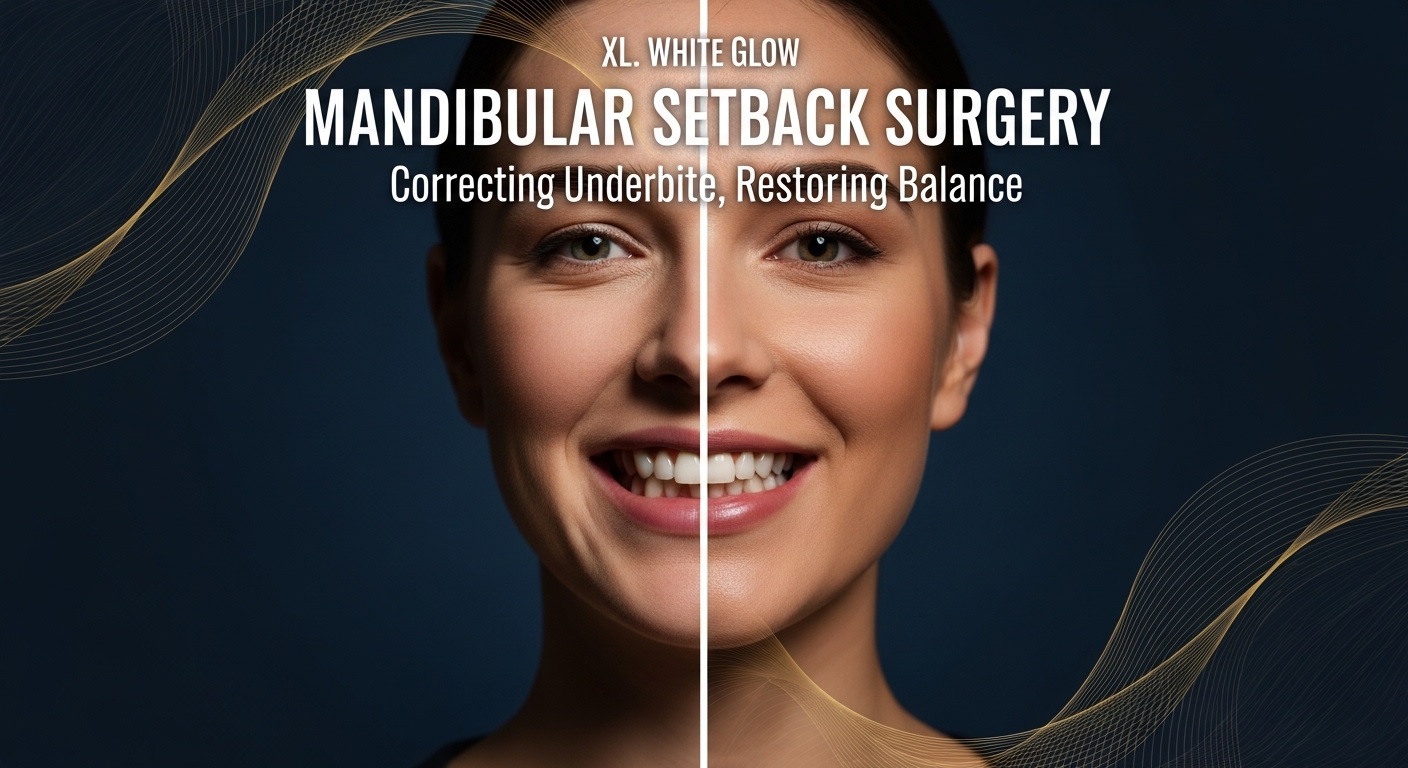
⭐ Mandibular Setback Surgery: Understanding How Lower Jaw Repositioning Corrects Underbite and Restores Facial Harmony
Mandibular setback surgery is a specialized corrective procedure designed to reposition an excessively forward lower jaw and treat underbite deformities that disrupt both facial balance and essential functions such as chewing, breathing, and speaking. Although orthodontic treatments can adjust tooth alignment, they cannot correct skeletal discrepancies. For patients with a prominent mandible, mandibular setback surgery becomes the most effective and enduring solution.
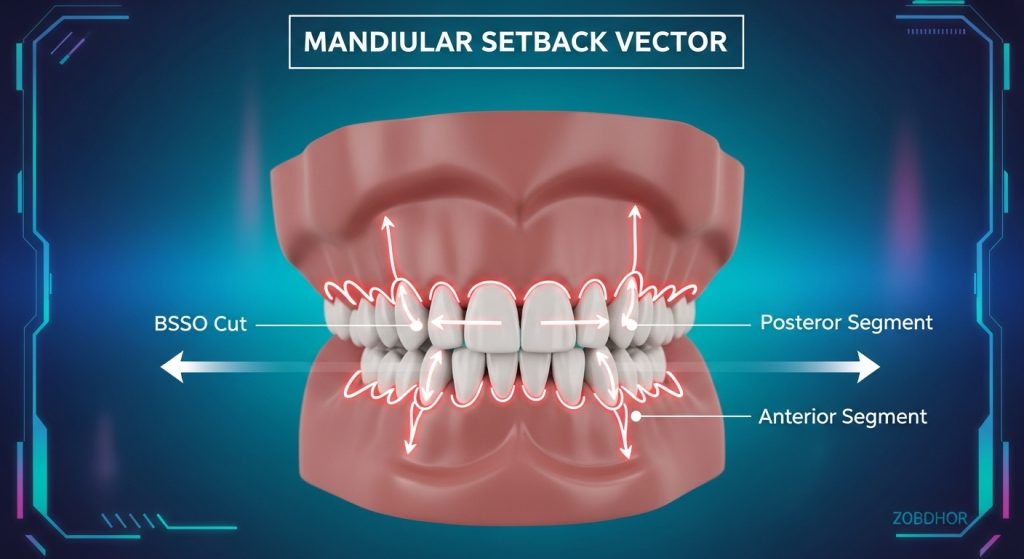
The procedure involves careful planning using 3D imaging, digital bite simulations, airway assessment, and cephalometric analysis. During surgery, the lower jaw is repositioned backward along a measured vector to restore a harmonious relationship between the upper and lower jaws. This shift creates a profound improvement in occlusion mechanics, joint comfort, and facial aesthetics, especially the jawline and chin profile.
Beyond the physical transformation, patients often describe a deep emotional shift. Living with a forward jaw can impact self-esteem, facial expression, and social confidence. Many report years of trying to hide their profile or smiling with restraint. After mandibular setback surgery, this psychological burden often lifts, replacing self-consciousness with a feeling of balance, ease, and restored identity.
😊 What Is Mandibular Setback Surgery?
Mandibular setback surgery is a form of orthognathic surgery used to correct an overprojected lower jaw, medically known as mandibular prognathism. When the mandible grows too far forward relative to the upper jaw, the teeth no longer align properly, leading to an underbite. This mismatch affects not only appearance but also the function of the jaw muscles, joints, and airway.
Patients often notice they struggle to bite foods cleanly, chew efficiently, or pronounce certain sounds. Others develop chronic TMJ tension, headaches, or mouth breathing habits. The surgery repositions the lower jaw backward using specialized osteotomy techniques, restoring a healthy bite and a more proportionate facial profile.
Orthodontic braces and aligners alone cannot fix an underbite caused by skeletal imbalance. They can straighten teeth, but they cannot move bone. This is why mandibular setback surgery is often recommended after a comprehensive evaluation by maxillofacial specialists.
✨ Why Underbite Happens: A Deeper Look at the Anatomy
An underbite is not simply a cosmetic concern. It represents a discrepancy in the growth patterns of the maxilla and mandible. In some individuals, the lower jaw grows too long; in others, the upper jaw grows insufficiently. Genetics plays a strong role, though childhood habits, airway issues, and trauma may also contribute.
When left uncorrected, an underbite can cause gradual but significant challenges. Patients may chew asymmetrically, leading to uneven tooth wear. The facial muscles often work harder than necessary to maintain closure, resulting in fatigue and tension. Speech sounds such as “s,” “f,” or “v” may distort. Some patients experience nasal obstruction or sleep-disordered breathing because the tongue position shifts forward when the jaw is oversized.
Mandibular setback surgery is designed to correct the skeletal root of these problems, not merely the symptoms.
💬 A Patient’s Story: Living with a Forward Jaw
Many patients describe their experience with an underbite as more emotional than physical. One 26-year-old patient explained:
“Every photo taken from the side felt like a reminder of something I couldn’t hide. My jaw wasn’t just forward — it made me feel forward in ways I didn’t want to be noticed.”
Another patient shared that despite good dental hygiene, her bite never felt “right,” making everyday chewing tiring. Socially, she avoided laughing fully or turning her head to the side.
These narratives highlight a powerful truth: mandibular setback surgery is not only about reshaping bone — it is about restoring comfort in how a person sees themselves and how they feel seen by others.
🧬 How Mandibular Setback Surgery Works (Step-by-Step Insight)
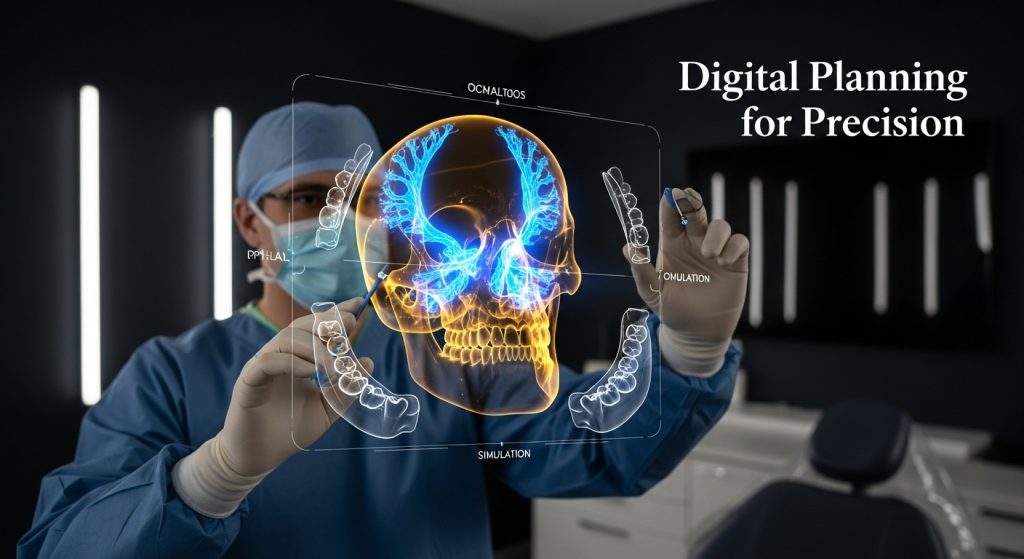
The surgical planning phase is exceptionally precise. Surgeons begin with digital scans, cephalometric measurements, and 3D simulations. They analyze each millimeter of planned movement, assessing how the shift will affect the bite, airway, joint pressure, and facial balance.
During mandibular setback surgery, an intraoral approach ensures no external scars are created. The most common technique is a bilateral sagittal split osteotomy (BSSO), in which the mandible is carefully divided into segments. The backward movement is made along a predetermined vector so the jaw fits harmoniously with the upper jaw.
Titanium plates and screws secure the new position, allowing the bone to heal steadily. Over the next weeks, the facial muscles adapt, the bite stabilizes, and the jaw’s biomechanics return to a naturally efficient pattern.
🌟 How the Face Changes After Mandibular Setback Surgery
An underbite often creates a dominant, forward-projecting jawline, altering how light and shadow fall on the face. The chin may appear too long, the lower facial third too large, or the smile too flat.
After mandibular setback surgery, the transformation is striking yet natural. The lower face becomes more proportionate, the profile softens, and the chin aligns with the rest of the facial structure. These changes restore the classical facial aesthetic triangle — balanced cheekbones, balanced jawline, and harmonious symmetry.
Patients frequently describe seeing themselves “as they were meant to look.”
🌙 Functional Benefits That Go Beyond Appearance
Correcting the forward jaw has substantial functional advantages:
- Chewing becomes easier and more efficient.
- Speech articulation improves.
- The TMJ experiences less tension and fewer episodes of clicking.
- Mouth breathing decreases, and nasal breathing improves.
- The tongue rests in a healthier position, reducing airway obstruction.
- In many cases, these improvements drastically enhance sleep quality and overall energy levels.
🌿 Recovery: What Does Healing Actually Feel Like?
The initial swelling peaks within a few days but gradually decreases. Patients follow a soft diet, maintain careful oral hygiene, and attend follow-up visits to monitor healing. Most return to normal routines within weeks, though complete bone integration takes a few months. Patients often describe the emotional recovery as equally meaningful — a process of reintroducing themselves to a face that feels more aligned with how they’ve always imagined themselves.
⚠️ Risks and Considerations
Swelling, temporary numbness, and limited jaw movement are common in the early recovery period but typically resolve gradually. Experienced surgeons minimize airway complications and ensure precise alignment with digital planning. Understanding the journey, staying consistent with aftercare, and maintaining orthodontic follow-ups are essential for long-term stability.
❓ FAQs About Mandibular Setback Surgery
Is mandibular setback surgery painful?
Discomfort is mild to moderate and controlled with medication.
How long does recovery take?
Most daily activities resume in 2–3 weeks; full bone healing takes months.
Will my appearance change drastically?
Your facial profile improves naturally without looking artificial.
Can orthodontics replace surgery?
No. Orthodontics cannot reposition the mandible if the issue is skeletal.
Does mandibular setback surgery help TMJ issues?
Yes. Correcting the jaw reduces strain on the joint and surrounding muscles.
🌟 Why Trust Dr. Mani Arash Rad?
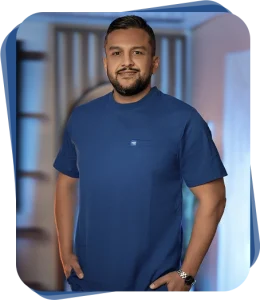
Dr. Mani Arash Rad is a leading expert in functional and aesthetic jaw surgery, with extensive experience treating complex underbite deformities through advanced mandibular setback surgery techniques. His approach blends anatomical precision with aesthetic understanding to create results that are stable, natural, and deeply aligned with each patient’s identity.
📍 Address: Tehran, Saadat Abad, Sarv Gharbi, Bakhshayesh St., Fifteenth Street West, Sinam Medical Building, Third Floor, Unit 11
📞 Contact: 02122364547 — 02126760580 — 09197890709
🕒 Hours: Saturday / Monday / Wednesday — 3 PM to 8 PM
💬 WhatsApp: 09197890709
🌐 Website: www.drmaniarash.com