When people notice fullness under their chin, they often call it a “double chin.” But in reality, not all double chins are created equal. Some are the result of excess fat deposits, while others are due to loose, sagging skin that no longer has the strength to stay firm. Understanding the difference between double chin fat vs sagging skin is the first step toward finding the right treatment and achieving a youthful, defined jawline.
What you read in this article
🌱 What Exactly Is a Double Chin?
A double chin, medically known as submental fullness, is an aesthetic condition where extra tissue gathers beneath the chin and around the jawline. Many assume that every double chin is caused by fat, but that’s not true. For some patients, the main culprit is loose skin; for others, it’s fat; and often, it’s a combination of both.
This is why specialists emphasize the importance of a careful evaluation. If you treat fat when the main issue is skin laxity, results will be disappointing. On the other hand, trying to tighten skin when the real issue is fat won’t create the desired contour. In short, double chin fat vs sagging skin are two very different conditions requiring different solutions.
🍔 Double Chin Caused by Fat
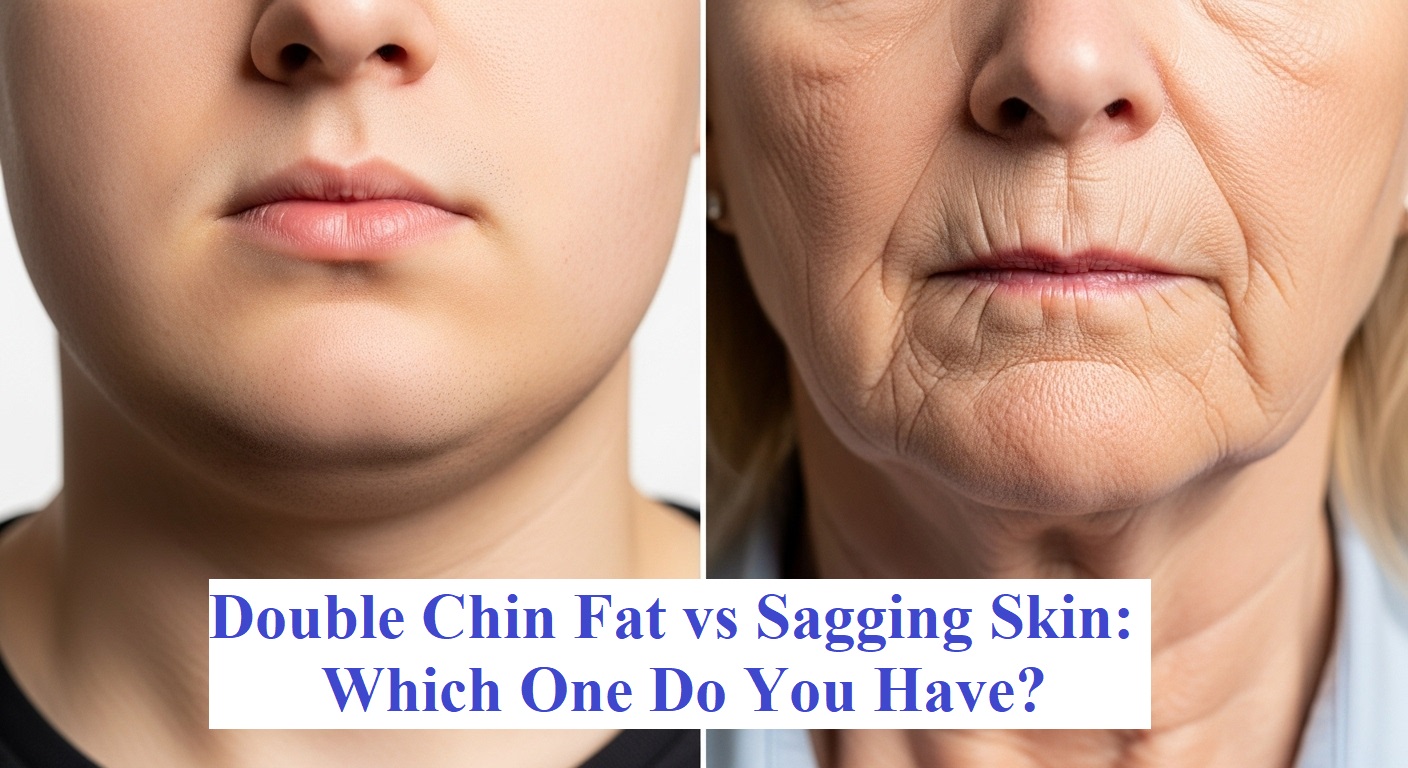
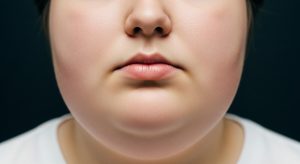
One of the most frequent patterns in double chin fat vs sagging skin cases is when the problem is primarily due to fat. In this situation, the chin looks fuller because of excess fat deposits beneath the skin, also known as submental fat. This type of double chin is often soft, rounded, and easy to pinch between the fingers. Patients dealing with fat-based fullness usually describe the area as feeling “puffy” or “bulky,” making it very different from the looser appearance of sagging skin.
✨ Causes of Fat-Based Double Chin
🍩 Weight Gain: Even a small increase in body weight can trigger noticeable fat buildup under the chin. When comparing double chin fat vs sagging skin, weight gain almost always belongs to the “fat” category. This is why younger patients who gain only a few kilos may suddenly notice fullness under the chin, even without major overall obesity.
🧬 Genetics: Some people are genetically predisposed to store more fat in the submental region. Even slim or athletic individuals may develop a double chin if this trait runs in their family. In the debate of double chin fat vs sagging skin, genetic factors strongly emphasize the fat-driven side of the problem.
🛋️ Lifestyle Factors: A poor diet, lack of exercise, and long hours of sitting slow down metabolism and encourage fat accumulation under the chin. Over time, these habits make a double chin appear more prominent. Again, in the context of double chin fat vs sagging skin, lifestyle-driven changes clearly highlight fat as the primary cause, rather than skin laxity.
How It Looks in Practice

Patients with fat-driven double chins usually present a smooth, rounded bulge beneath the chin. It doesn’t necessarily sag or wrinkle like skin-laxity cases; instead, it creates a fullness that blends directly into the neck. This makes it easier for surgeons to distinguish the “fat” side of double chin fat vs sagging skin.
This type of double chin is especially common in younger adults, sometimes appearing as early as the late teens or twenties if weight gain or genetics are strong contributors. Unlike sagging skin, which is mostly age-related, fat-based double chins can appear much earlier in life.
🏥 Best Treatment Options for Fat
💉 Liposuction: The gold standard for stubborn chin fat, providing immediate and long-lasting results.
💎 Fat-Dissolving Injections (Kybella): A non-surgical option that gradually breaks down fat cells over multiple sessions.
❄️ CoolSculpting and Similar Technologies: Non-invasive devices that freeze and reduce fat pockets.
Each of these treatments specifically targets fat cells. But here’s the key: if sagging skin is also present, fat removal alone won’t be enough. That’s where we need to compare double chin fat vs sagging skin more closely.
🧓 Double Chin Caused by Sagging Skin
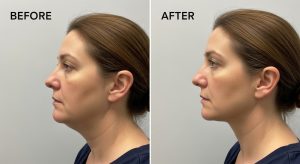
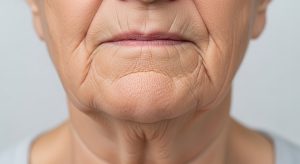
Not all double chins are the result of fat. For many people—especially after their mid-30s—the issue is sagging skin. In the comparison of double chin fat vs sagging skin, this category is strongly linked to aging rather than weight gain. As the body grows older, it produces less collagen and elastin, the two key proteins responsible for keeping skin firm and supple. Without these supportive fibers, the skin loses its strength and begins to hang more loosely beneath the chin, creating what many people call a “turkey neck.” This makes the sagging side of the double chin fat vs sagging skin equation especially common among middle-aged and older adults.
✨ Causes of Sagging Skin
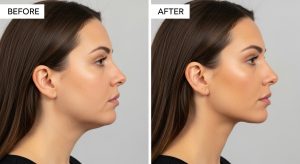
⏳ Aging: The most common factor. Collagen loss begins as early as your 20s but accelerates in your 40s and 50s, making skin looser.
⚖️ Weight Loss: Rapid or significant weight loss often leaves behind stretched skin that can no longer snap back.
🌞 Sun Damage: Years of UV exposure damage collagen fibers, speeding up skin laxity.
🧬 Genetics: Some people naturally have thinner, less elastic skin, making them more prone to sagging.
How Sagging Skin Looks in Practice
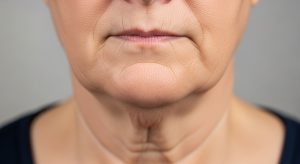
Patients with skin-laxity-driven double chins often notice:
Loose folds beneath the jawline
A wrinkled or crepey texture under the chin
Lack of sharp definition, even if body weight is stable
The appearance of vertical “bands” from weakened neck muscles
Unlike fat-based double chins, sagging skin tends to “hang” rather than “bulge.”
🏥 Best Treatment Options for Sagging Skin
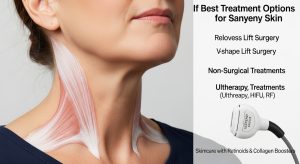
If sagging skin is the main culprit, removing fat won’t solve the problem. Instead, treatments that tighten, lift, and rejuvenate the skin are recommended.
🔪 Neck Lift Surgery: Removes excess skin, tightens underlying muscles, and restores youthful contours.
💎 V-line Surgery: Reshapes the jawline and chin, creating a sharper, more balanced profile.
📡 Non-Surgical Treatments (Ultherapy, HIFU, RF): Stimulate collagen production, improving firmness gradually.
🧴 Skincare with Retinoids and Collagen Boosters: Support skin health, though effects are subtle compared to medical procedures.
⚖️ Double Chin Fat vs Sagging Skin: Key Differences
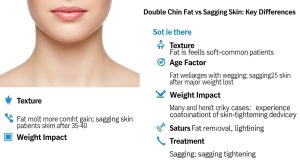
So, how can you tell whether your double chin is from fat, sagging skin, or both? Here are the most important distinctions:
🥯 Texture: Fat feels soft and cushion-like, while sagging skin feels thin and loose.
🧑🎓 Age Factor: Fat is more common in younger patients; sagging skin often appears after 35–40.
⚖️ Weight Impact: Fat enlarges with weight gain; sagging often appears after major weight loss.
🛠️ Treatment: Fat requires removal, while sagging requires tightening.
👉 And here’s the tricky part: many patients experience a combination of both. In such cases, the most effective solution is a customized treatment plan—often combining liposuction with skin-tightening surgery or energy-based devices.
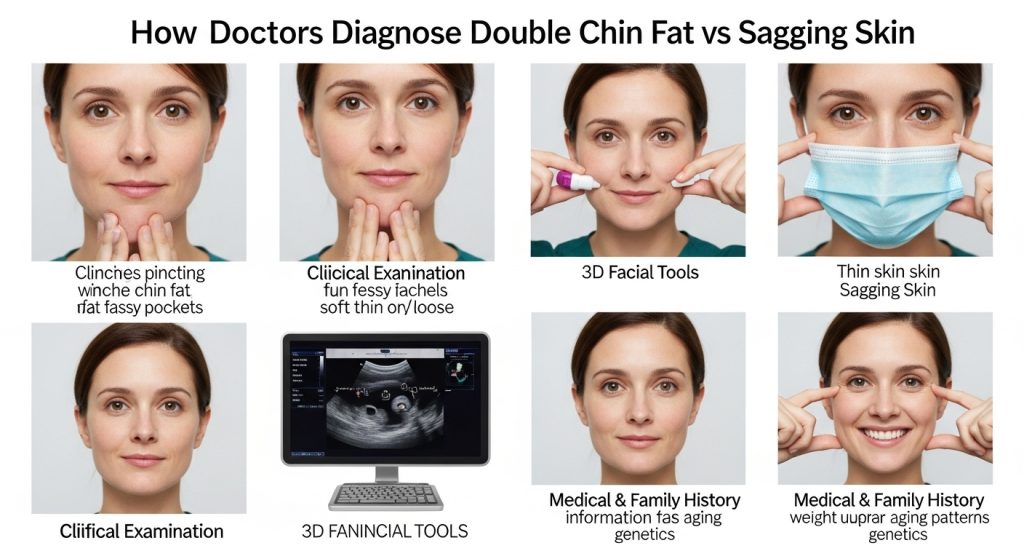
🧑⚕️ How Doctors Diagnose Double Chin Fat vs Sagging Skin
Only a professional evaluation can truly determine whether your double chin is caused by fat, sagging skin, or both. During consultation, surgeons use a combination of methods:
🔎 Clinical Examination: The surgeon gently pinches and assesses tissue under the chin to check whether it feels soft and fatty or thin and loose.
🖥️ Imaging Tools: Advanced options like 3D facial scans or ultrasound help map out fat pockets and skin elasticity in detail.
📖 Medical & Family History: Information about weight fluctuations, aging patterns, and genetics offers valuable clues.
This careful evaluation is essential, because treating the wrong cause leads to unsatisfying results.
🔄 Combination Cases: When Fat and Skin Coexist
For many patients, the double chin is not purely about fat or purely about skin. Instead, both conditions overlap.
✨ Younger Patients: Often have more fat than sagging skin. Liposuction or fat-dissolving injections may be enough.
✨ Older Patients: Tend to show skin laxity in addition to fat. In these cases, a combined approach—such as liposuction plus neck lift or V-line surgery—produces the most natural outcome.
✨ Weight Loss Patients: After major weight loss, fat is reduced but excess skin remains, so skin-tightening is the priority.
The best results always come from personalized treatment plans that address the true underlying cause.
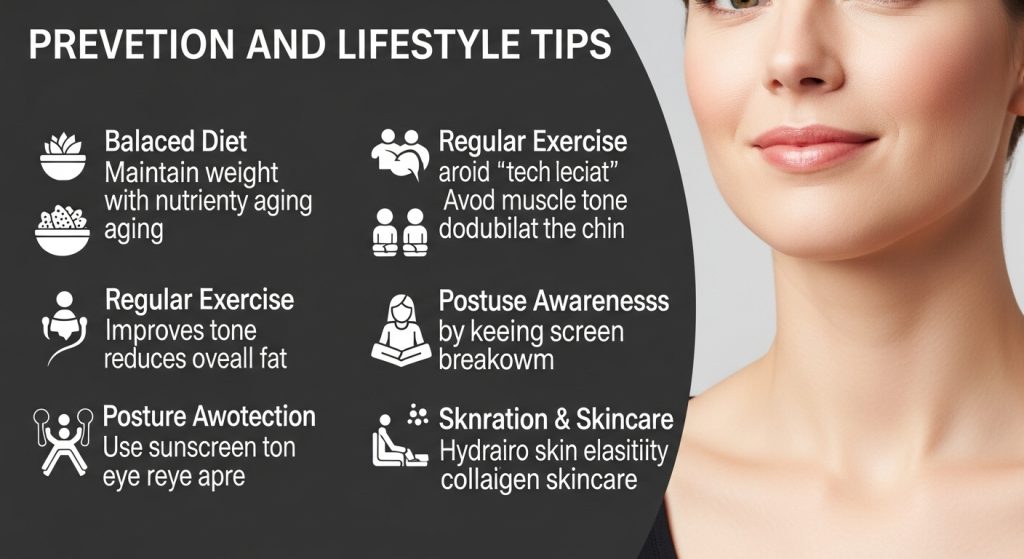
🌟 Prevention and Lifestyle Tips
While not all causes are preventable (like genetics or aging), there are steps you can take to minimize the risk of developing a noticeable double chin:
🥗 Balanced Diet: Maintain a healthy weight with nutrient-rich foods.
🏃 Regular Exercise: Improves muscle tone and reduces overall fat.
🧘 Posture Awareness: Avoid “tech neck” by keeping screens at eye level.
🌞 Skin Protection: Use sunscreen to prevent collagen breakdown.
💧 Hydration & Skincare: Support skin elasticity with proper hydration and collagen-boosting skincare.
❓ Frequently Asked Questions
1. How do I know if my double chin is fat or sagging skin?
If the tissue feels soft and cushion-like, it’s usually fat. If it looks loose, wrinkled, or hangs downward, sagging skin is the likely cause.
2. Can sagging skin be fixed without surgery?
Mild to moderate cases may improve with non-surgical treatments like HIFU, RF, or Ultherapy. Severe laxity often requires surgical lifting.
3. Do double chin exercises work for both fat and sagging skin?
Exercises may help reduce fat slightly and strengthen muscles, but they cannot tighten loose skin.
4. What is the best treatment for a mixed case of fat and sagging skin?
A combination of fat removal (liposuction) and skin tightening (neck lift or V-line surgery) usually works best.
5. Can young people have sagging skin under the chin?
Yes. Rapid weight loss or genetic factors can lead to sagging skin even in younger patients.
🌟 Why Trust Dr. Mani Arash Rad

Dr. Mani Arash Rad is a highly regarded specialist in facial contouring, known for his ability to distinguish subtle differences between double chin fat vs sagging skin. His philosophy goes beyond simple correction—he focuses on holistic harmony, combining advanced surgical techniques with an artistic understanding of facial proportions.
With expertise in V-line surgery, neck lifts, and double chin correction, Dr. Rad designs tailored treatment plans that enhance natural beauty without compromising individuality. Patients trust him for his evidence-based approach, meticulous precision, and consistent, natural-looking results.
📍 Address: Tehran, Iran, Saadat Abad, Sarv Gharbi, Bakhshayesh St., Fifteenth Street West, Sinam Medical Building, Third Floor, Unit 11
Working hours
Saturday, Monday and Wednesday 3pm to 8pm
🌐 Website: www.drmaniarash.com