Facial symmetry has always been a central element in how humans perceive beauty. Across cultures and throughout history, balanced features have been associated with harmony, attractiveness, and even social confidence. Yet very few faces are naturally symmetrical. Tiny differences in jaw angle, chin alignment, or bone projection can make one side of the face look stronger or softer than the other. These subtle imbalances might seem minor, but our brains are remarkably sensitive to them. This is where facial symmetry optimization by V-line surgery becomes a transformative approach—reshaping the lower face with precision so both sides align in a way that feels natural, proportional, and harmonious.
Instead of being just a cosmetic trend, facial symmetry optimization by V-line surgery combines advanced surgical artistry with scientific planning, allowing individuals to achieve a face that not only looks balanced but also reflects their natural identity more accurately.
What you read in this article
Why Facial Symmetry Defines Human Beauty

When you look at someone for the first time, your brain processes the proportions of their face in milliseconds. Balanced features subconsciously communicate health, vitality, and youthfulness. While complete mathematical symmetry is impossible, a face that appears symmetrical is perceived as more appealing. Researchers in psychology have shown that our perception of beauty is strongly tied to symmetry because it reflects genetic stability and developmental health.
That’s why facial symmetry optimization by V-line surgery is more than an aesthetic upgrade—it’s a correction that aligns with how we are neurologically wired to read attractiveness.
Common Reasons for Facial Asymmetry
Almost everyone has at least slight asymmetry, but in some people it’s more visible:
✨ Jaw deviation – where one side of the mandible is longer or more prominent
✨ Chin deviation – when the chin points slightly left or right instead of the midline
✨ Uneven mandibular angles – one side appearing sharper or bulkier
✨ Muscular imbalance – stronger chewing muscles on one side pulling differently
✨ Past injuries or dental habits – trauma or chewing dominance exaggerating unevenness
These differences can disrupt overall facial harmony. Facial symmetry optimization by V-line surgery directly addresses these skeletal and soft tissue variations, creating alignment where nature left imbalance.
How V-line Surgery Corrects Asymmetry

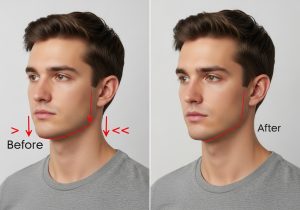
The genius of facial symmetry optimization by V-line surgery lies in its ability to reshape the core framework of the lower face:
💎 Mandibular angle reduction – trimming the bone at the back of the jaw to create matching contours on both sides
💎 Chin reshaping (genioplasty) – sliding, reshaping, or repositioning the chin so it sits precisely at the midline
💎 Harmonizing bone and soft tissue – ensuring that skin, fat, and muscle adjust naturally over the refined structure
This isn’t about carving the same angles on every patient—it’s about tailoring adjustments so both halves of the face balance with each other and with the upper face.
Technology That Makes Symmetry Possible

Today’s best results rely on technology. Advanced clinics use 3D CT scans and simulation software to model the surgery before it even begins. In facial symmetry optimization by V-line surgery, this planning is crucial:
✨ Virtual surgery previews show exactly how bone shifts will affect balance
✨ Digital surgical guides translate the plan into accurate bone cuts during surgery
✨ 3D printing allows surgeons to design custom templates that guarantee millimeter precision
By simulating both sides of the face, surgeons can avoid overcorrection and ensure that the jawline looks naturally balanced rather than artificially sculpted.
Balancing Soft Tissue Alongside Bone
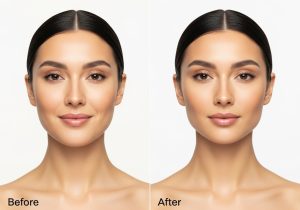
Symmetry isn’t just about the skeleton. Even after the bone is corrected, the skin, fat, and muscles must adapt. Facial symmetry optimization by V-line surgery often integrates soft tissue considerations:
🌿 Adjusting muscle thickness for balance
🌿 Considering skin elasticity to prevent sagging on one side
🌿 Complementary procedures like subtle fat grafting or botulinum toxin to fine-tune harmony
When bone and soft tissue are aligned together, the result is a symmetry that doesn’t just look good in photos but feels completely natural in motion and expression.
The Goal: Natural Balance, Not Artificial Perfection

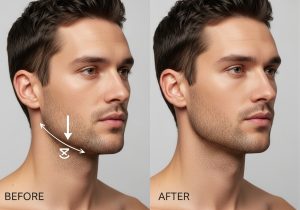
No human face is perfectly symmetrical, and chasing absolute mathematical balance can create an unnatural look. The aim of facial symmetry optimization by V-line surgery is to bring the two halves of the face closer together in a way that feels organic. Small refinements in chin placement or jawline slope can create a dramatic improvement in perceived balance, even if microscopic differences remain.
This philosophy is what makes the outcome so satisfying: the person still looks like themselves—just more aligned, harmonious, and confidently balanced.

Long-Term Stability of Symmetry
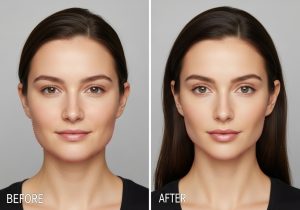
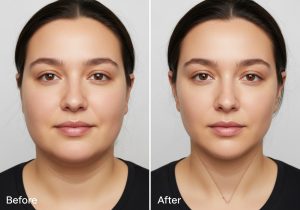
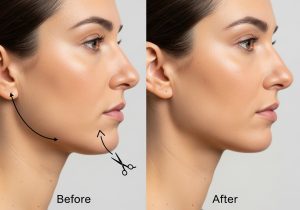
When bone structures are corrected, they stay corrected. That’s why facial symmetry optimization by V-line surgery offers permanent results compared to temporary fillers or surface treatments. As swelling subsides and tissues settle, the balanced framework reveals itself more clearly over time. Many patients report that by 6 to 12 months after surgery, they no longer notice the asymmetry that once bothered them.
Challenges and Limitations
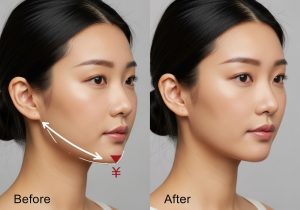
While the procedure is powerful, it’s not magic. Facial symmetry optimization by V-line surgery has natural limitations:
⚠️ Different bone density or thickness between sides may affect final balance
⚠️ Soft tissue healing can vary, creating slight post-op asymmetry
⚠️ Absolute perfection is biologically impossible; the goal is perceptual harmony
Acknowledging these realities helps patients appreciate their results for what they are: the most natural and lasting balance achievable through modern surgical artistry.
Frequently Asked Questions
Can facial symmetry optimization by V-line surgery fix complete asymmetry?
It can correct most skeletal and soft tissue deviations, but results aim for natural harmony, not machine-like perfection.
How soon will I notice facial symmetry after surgery?
Swelling may disguise results early, but by 3–6 months the improvements in balance are clearly visible.
Is asymmetry only in the bones?
Not always. Muscles, skin, and fat layers also contribute, which is why the surgery considers both bone and soft tissue.
Will my face look unnatural?
No. The purpose of facial symmetry optimization by V-line surgery is to enhance your natural features, not replace them with an artificial template.
Are results permanent?
Yes. Once the bone structure is realigned, the change is lasting, although natural aging will still affect the face over time.
Why Trust Dr. Mani Arash Rad

When it comes to facial symmetry optimization by V-line surgery, Dr. Mani Arash Rad is recognized for combining precise anatomical knowledge with an artistic eye for balance. He employs 3D planning, advanced imaging, and tailored surgical strategies to create results that respect both natural identity and aesthetic goals. International patients especially value the clinic’s transparent planning and supportive care throughout their journey.
📍 Location: Saadat Abad, Sina Medical Center, Tehran
📱 WhatsApp: +98 919 789 0709
🌐 Website: www.drmaniarash.com