V-line surgery risks and complication management are essential frameworks that every patient—especially international ones coming to Tehran—must understand before electing to reshape their lower face. Unlike general overview pieces, this guide provides a detailed examination of potential issues, including why they occur, how to minimize the risk of adverse events, and the steps to take when complications arise. Knowledge of V-line surgery risks and complication management empowers patients to ask the right questions, choose a surgeon with the proper risk mitigation mindset, and participate actively in their own safety and outcome.
What you read in this article
Defining V-line surgery risks and complication management
When discussing V-line surgery risks and complication management, it’s crucial to separate the nature of potential harms (risks) from the structured responses to them (management). Risks are inherent possibilities—bleeding, infection, nerve injury, asymmetry—while complication management refers to preoperative planning, intraoperative technique, early detection, and both medical and surgical interventions that limit permanent harm. This article centers on both recognition of the full spectrum of V-line surgery risks and complication management, as well as the practical strategies to neutralize or correct them.
Preoperative evaluation: First line of defense in V-line surgery risks and complication management
Effective V-line surgery risks and complication management begin before the scalpel touches bone. A thorough preoperative assessment identifies patient-specific risk enhancers: smoking status, uncontrolled diabetes, bleeding disorders, prior facial surgeries, or anatomical variants. Advanced imaging (3D CT or CBCT) reveals bone thickness, nerve pathways, and chin-jaw relationships, allowing the team to anticipate technical challenges. Surgeons who prioritize V-line surgery risks and complication management will delay or modify procedures when modifiable risks aren’t optimized, for example, insisting on smoking cessation or glycemic control before proceeding.
Categories of risk

Understanding categories makes V-line surgery risks and complication management systematic:
1. Anesthesia-related risks
Even though V-line surgery is often performed under general anesthesia or deep sedation, there are inherent anesthesia-related risks: allergic reactions, respiratory compromise, cardiovascular fluctuations, and postoperative nausea. Proper pre-anesthesia clearance and experienced anesthetic teams in Tehran are part of robust V-line surgery risks and complication management protocols.
2. Hemorrhage and hematoma
Excessive bleeding during or after the procedure can lead to hematoma formation, which, if unrecognized, can compromise healing or compress structures. Immediate hemostasis intraoperatively and postoperative monitoring are cornerstones of V-line surgery risks and complication management to prevent or evacuate collections early.
3. Infection
Any surgical intervention carries an infection risk. In V-line surgery, risks and complication management are mitigated by sterile technique, appropriate preoperative skin and oral decontamination, and, when indicated, prophylactic antibiotics. Early signs—redness, purulent discharge, fever—must be identified promptly to initiate antibiotics or drainage.
4. Nerve injury
Manipulating the mandible and chin threatens sensory and motor nerves (e.g., the inferior alveolar or mental nerves). Temporary numbness is common; persistent deficits reflect nerve trauma. High-quality V-line surgery risks and complication management include gentle dissection, nerve mapping when appropriate, and counseling patients preoperatively on expected timelines and red flags.
5. Bone healing complications
Nonunion, malunion, or uneven bone remodeling can distort the intended V-line. Preoperative planning, stable fixation when indicated, and avoiding over-aggressive resection are part of responsible V-line surgery, risks, and complication management to ensure the skeletal foundation heals harmoniously.
6. Asymmetry and over/under-resection
Unbalanced bone removal leads to facial asymmetry or an insufficient effect. Surgeons focused on V-line surgery risks and complication management use intraoperative measurements, templates, and sometimes real-time imaging to minimize these discrepancies.
7. Soft tissue irregularities and scarring
Although many incisions are intraoral to hide scars, internal fibrosis, tethering, or soft tissue puckering can affect contour. Proper handling of soft tissues and staged management of irregularities reflect advanced V-line surgery risks and complication management.
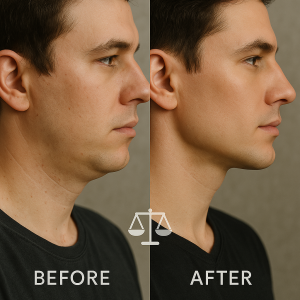
8. TMJ dysfunction
Altering jaw geometry may affect temporomandibular joint mechanics in susceptible individuals, potentially exacerbating or initiating dysfunction. Preoperative screening and conservative modification tactics are part of comprehensive V-line surgery risks and complication management.
9. Vascular injury
Unexpected injury to blood vessels can cause bruising, swelling, or deeper complications. Clear anatomical knowledge and surgical precision are vital components of preventative V-line surgery risks and complication management.
10. Rare systemic reactions
Allergic responses to implants (if used), anesthetic agents, or medications, though uncommon, are part of the risk inventory. Preparedness—including resuscitation protocols—is an underappreciated facet of complete V-line surgery risks and complication management.
Risk factors that amplify V-line surgery risks and complication management challenges
Certain patient characteristics elevate the complexity of V-line surgery risks and complication management:
- Smoking: Impairs microvascular flow, delaying healing and increasing infection.
- Poor systemic health: Uncontrolled diabetes or autoimmune conditions compromise immune response and repair.
- Prior surgeries or radiation: Alter tissue planes and vascularity, making dissection harder and healing less predictable.
- Inexperienced surgeon: Poor judgment or technical execution dramatically increases the likelihood that V-line surgery risks and complication management become reactive rather than proactive.
Recognizing these amplifiers allows the surgical team to either optimize, postpone, or adjust the procedure within a risk-aware V-line surgery risks and complication management paradigm.
Intraoperative strategies for V-line surgery risks and complication management

Execution is the moment when planning meets action. Robust V-line surgery risks and complication management include:
- Precision planning is translated intraoperatively with templates or surgical guides.
- Meticulous hemostasis to prevent bleeding complications.
- Gentle handling of nerves with awareness of their anatomy and, in difficult cases, nerve monitoring.
- Minimizing bone trauma decreases shock to the system and encourages predictable healing.
- Sterile workflow and proper antibiotic timing to reduce infection risk.
Surgeons who internalize V-line surgery risks and complication management integrate checklists, peer verification for complex cases, and real-time decision pathways when encountering unexpected intraoperative findings.
Early postoperative complication identification and management
Early recognition is essential in V-line surgery risks and complication management. The immediate period demands vigilance for:
- Uncontrolled bleeding or hematoma: Rapid swelling, pain, or firmness may require urgent drainage.
- Signs of infection: Fever, foul odor, discharge—prompt antibiotic therapy or operative debridement when indicated.
- Nerve distress beyond expected temporary numbness: Persistent or worsening sensory changes merit early neurologic consultation.
- Wound dehiscence or oral compromise: Ensuring oral hygiene and avoiding undue pressure on internal sutures is part of proactive management.
Structured follow-up schedules, patient education on warning signs, and easy lines of communication (especially for international patients who might still be in Tehran during this critical window) are central to successful V-line surgery risk and complication management.
Late complications and their management within V-line surgery risks and complication management
Some complications manifest or persist later, and effective V-line surgery risks and complication management include long-term oversight:
- Persistent asymmetry: May necessitate minor revision osteoplasty or soft tissue balancing.
- Chronic numbness or neuropathic pain: Neurological evaluation, possible nerve repair, or pain modulation strategies are considered.
- Contour irregularities due to healing variability: Fat grafting or fillers can camouflage mild defects if structural revision is not warranted.
- Bone resorption or remodeling distortion: In rare cases, secondary skeletal procedures may be required after careful reassessment.
Late-stage V-line surgery risks and complication management balance correction with avoiding over-intervention, tailoring each step to prior healing history.
Revision and salvage strategies in V-line surgery, risks, and complication management
When initial outcomes deviate from ideal, a clear pathway for revision reflects high-level V-line surgery risks and complication management. Revision strategies might include:
- Secondary bone contouring to correct asymmetry or residual bulk.
- Soft tissue refinement for overlying irregularities or deficient support.
- Nerve repair or decompression for persistent sensory deficits.
- Scar modulation using minimally invasive techniques when internal scarring affects the contour.
Surgeons who provide transparent revision policies demonstrate that V-line surgery risks and complication management is a continuum, not a one-time checklist.
Communication, consent, and expectation setting as part of V-line surgery risks and complication management
Informed patients are safer patients. Robust V-line surgery risks and complication management require:
- Clear preoperative counseling about specific risks pertinent to the individual’s anatomy.
- Documented consent with personalized risk breakdown, not generic forms.
- Visual simulations or diagrams that explain what changes might look like and where complications are most likely.
- Discussion of worst-case scenarios and proposed mitigation plans so the patient doesn’t feel blindsided.
This shared decision-making model is foundational to ethical V-line surgery risks and complication management.
Emergency red flags for patients (V-line surgery risks and complication management alert)
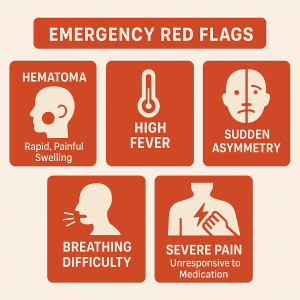
Patients must be armed with knowledge of urgent signs, a critical part of V-line surgery risks, and complication management:
- Rapid, painful swelling that feels tense (possible hematoma)
- High fever with rigors or purulent discharge (infection progression)
- Severe asymmetry developing suddenly (vascular compromise)
- Difficulty breathing or swallowing (rare but serious deep space issues)
- Unexpected severe pain unresponsive to medication (nerve crisis or compartment concerns)
Immediate contact with the surgical team and, if needed, emergency evaluation in Tehran is vital to limit sequelae.
Special populations: amplifying V-line surgery risks and complication management nuance
Certain groups require adjusted V-line surgery risks and complication management thinking:
- Smokers: Increased risk of wound healing compromise and infection.
- Diabetics: Fluctuating glucose impairs tissue repair—tight glycemic control is non-negotiable.
- Previous facial surgery patients: Scar tissue alters anatomy and may hide or exacerbate risks already inherent in V-line procedures.
- Patients with bleeding disorders Require preoperative optimization and potentially hematology co-management.
Customizing risk pathways exemplifies mature V-line surgery risks and complication management.
Patient preparedness checklist for V-line surgery risks and complication management
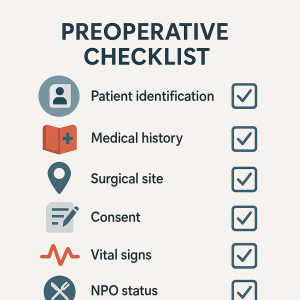
Before surgery, patients should verify the following to support their own safety:
- ☐ Comprehensive imaging and surgical plan reviewed
- ☐ Medical conditions optimized (e.g., diabetes, smoking cessation)
- ☐ Understanding of anesthesia risks and clearance obtained
- ☐ Clear postoperative communication channel (especially for international visitors)
- ☐ Written revision policy and complication response plan provided
- ☐ Emergency signs explained in writing
- ☐ Follow-up schedule confirmed
- ☐ Realistic outcome discussion completed
This checklist is a practical manifestation of proactive V-line surgery risks and complication management.
Why surgeon experience in V-line surgery risks, and complication management matters
Choosing a surgeon who deeply understands V-line surgery risks and complication management is more predictive of good outcomes than flashy marketing. Experienced surgeons anticipate complications, structure their workflow to prevent them, and respond swiftly when problems emerge. Their team is familiar with early warning patterns and has established protocols for escalation, revision, and patient support, thereby preventing many severe consequences that would otherwise occur in reactive systems.
Frequently Asked Questions (FAQs)
- What are the most common V-line surgery risks and complication management concerns?
The most frequent issues involve swelling/hematoma, temporary nerve numbness, infection, and asymmetry; structured monitoring and early intervention mitigate these.
Can most complications be fixed?
Many can, if detected early; this is why vigilant V-line surgery risks and complication management with follow-up are critical. Some nerve injuries take months to improve or may be permanent, so candid preoperative counseling matters.
How does prior health affect V-line surgery risks and complication management?
Conditions like diabetes or smoking increase the risk of infection and poor healing, requiring optimization before surgery to lower those risks.
Is revision part of proper complication management?
Yes. A transparent revision policy is a hallmark of responsible V-line surgery risks and complication management—knowing when and how a secondary correction is appropriate ensures patients aren’t abandoned with suboptimal results.
What role does patient behavior play in complication prevention?
Excellent patient compliance with pre- and post-op instructions (e.g., avoiding smoking, maintaining hygiene) is a major factor in reducing the occurrence and severity of complications.

Dr. Mani Arash Rad’s clinic in Tehran specializes in V-line surgery with a clear focus on risk assessment and complication management. Patients receive preoperative 3D imaging, a straightforward explanation of potential issues and how they’re handled, and coordinated support. Multilingual care is available for international visitors throughout the process.
Request a focused consultation to assess your facial anatomy and get a tailored surgical plan with transparent risk guidance.
📍 Clinic: Saadat Abad, Sina Medical Center, Tehran
📱 WhatsApp: +98 9197890709
🌐 Website: www.drmaniarash.com
Mastery of V-line surgery risks and complication management is what separates predictable, safe transformations from uncertain, potentially damaging outcomes. International patients traveling to Tehran gain access to surgical teams who embed risk awareness into every phase—from assessment through possible revision—making their lower-face contouring journey both ambitious and guarded. Being informed, choosing a surgeon who prioritizes complication management, and engaging in the partnership are the best defenses against the full spectrum of V-line surgery risks and complication management challenges.