About Dr. Mani Arash Rad
Education, university teaching, clinical practice and research in oral and maxillofacial surgery.

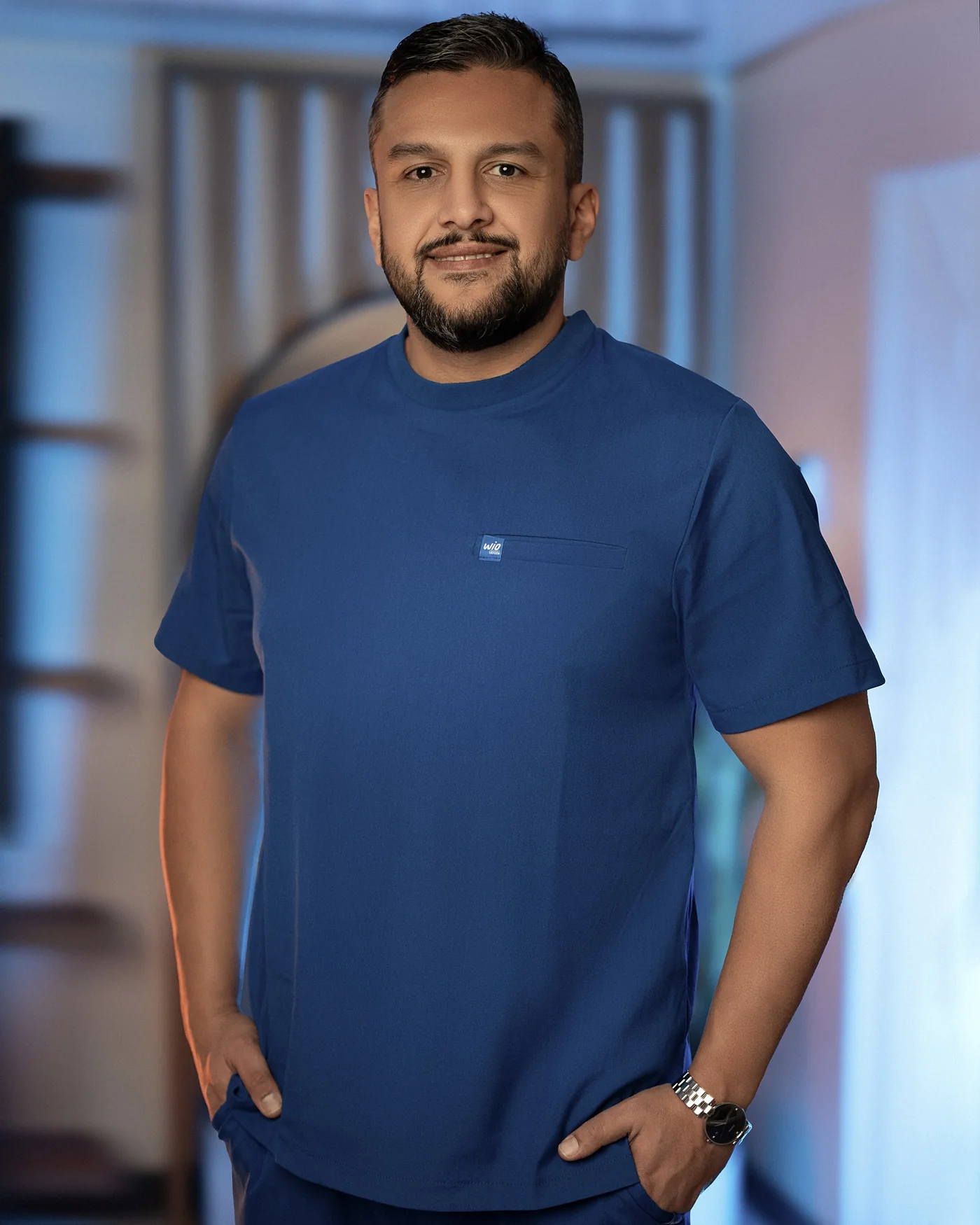
From dental school to oral and maxillofacial surgery
Dr. Mani Arash Rad began his dental education at Tehran University of Medical Sciences in the Iranian year 1384 (2005–06). After completing dentistry, he entered the university's oral and maxillofacial surgery specialty programme in 1391 (2012–13). He completed the five-year programme and passed the specialty board examination in 1396 (2017–18).
His next chapter combined clinical work with university teaching. From 1396 to 1399 (approximately 2017–2020), he served as a faculty member at Ilam University of Medical Sciences. His professional biography also describes around a year and a half as head of department. After this period, he returned to Tehran to continue practising oral and maxillofacial surgery.
His clinical interests bring together the structure, function and appearance of the face. They include jaw and chin surgery, V-line and mandibular contouring, rhinoplasty, orthognathic surgery and the surgical management of impacted teeth. Professional activity in Tehran and Dubai is reflected in the clinic and professional links below.
The consultation starts with the person's concern, rather than the name of an operation. Medical history, examination, imaging and expectations are considered together before discussing suitable approaches. Even when two people ask for a similar change, the structure of their face and the treatment they need may be different.
Education and academic work
- Dental education: Tehran University of Medical Sciences.
- Specialty training and board examination: oral and maxillofacial surgery.
- Former faculty member: Ilam University of Medical Sciences.
- Professional registration number: 136448.
Clinical areas
Jaw problems may affect chewing, bite, facial balance or the way the mouth opens. Chin and V-line consultations focus on the lower face while considering bone, muscle and soft tissue together. Rhinoplasty consultations include the shape of the nose and the quality of nasal breathing. Oral surgery consultations may involve impacted teeth, complex extractions or lesions requiring further assessment.
These areas are introduced with equal attention in the treatments section. Each guide explains who may benefit from assessment, what a consultation involves, alternatives, possible risks and practical preparation for recovery.
Published research
The publications below offer a closer look at Dr. Arash Rad's research activity. They cover different subjects in dentistry and oral and maxillofacial surgery, from diagnostic case reporting to postoperative care and restorative dentistry.
Solitary Intraosseous Neurofibroma of Mandible: A Case Report
Journal of Craniomaxillofacial Research, 2023. A report of an intraosseous neurofibroma of the mandible; Mani Arash-Rad is listed as corresponding author in the publication record. Read the publication and DOI.
Comparison of Naproxen and Novafen after Impacted Mandibular Third Molar Surgery
Journal of Mashhad Dental School, 2023. A comparison concerning pain, swelling and quality of life after impacted lower third-molar surgery. Read the publication and DOI.
Comparison of Marginal Adaptation of Cercon and Metal Ceramic Crowns Before and After Applying Porcelains
Journal of Dental Medicine, 2010. Research into the marginal adaptation of Cercon and metal-ceramic crowns. View the research record.
Patient information alongside clinical research
The site's English encyclopedia brings together practical articles about jaw and chin surgery, rhinoplasty, impacted teeth and recovery. These guides address questions that often arise before a consultation or during the days after treatment. They provide background for a conversation with the treating team and do not replace an individual examination.
Professional profiles and contact
- Sahara Smiles, Dubai
- Dr. Mani Arash on Instagram
- Dr. Arash Rad on Instagram
- Tehran clinic details and consultation arrangements
What to expect from a consultation
Bring any previous scans, a list of medicines and a short description of your main concerns. There is time to discuss your priorities, the reasons for each treatment option and what is realistic for your anatomy. Understanding the limits of treatment is as important as understanding the change it might achieve.