What you read in this article
- Botox for a Gummy Smile: The Psychology and Culture Behind Confidence
- 😊 The Hidden Psychology of Smiling
- 🌍 Cultural Aesthetics of the Smile
- 💡 How Botox for Gummy Smile Redefines Self-Perception
- 💬 The Social Ripple Effect
- ⚖️ The Role of the Physician as an Artist
- 🌿 Beyond Beauty: Ethics and Emotional Integrity
- 💫 Real Patients, Real Freedom
- 🧠 The Broader Meaning of Smiling
- ❓ FAQs about Botox for a Gummy Smile
- 🌟 Why Trust Dr. Mani Arash Rad?
Botox for a Gummy Smile: The Psychology and Culture Behind Confidence
Botox for a gummy smile is more than a cosmetic adjustment — it’s a quiet revolution in how people experience confidence, expression, and cultural identity. While a gummy smile — showing excessive gum tissue when smiling — has no medical harm, its emotional weight can be immense. Many individuals report avoiding laughter in photos, covering their mouths, or feeling that their smile distracts from their true personality.
Across societies, smiles are powerful social tools. In Western cultures, a balanced smile symbolizes composure; in East Asian aesthetics, restraint and symmetry are highly valued; in the Middle East, expressiveness and vitality are often considered defining characteristics of beauty. But regardless of geography, a gummy smile often evokes the same inner dialogue — “Will they notice my gums before they notice me?”
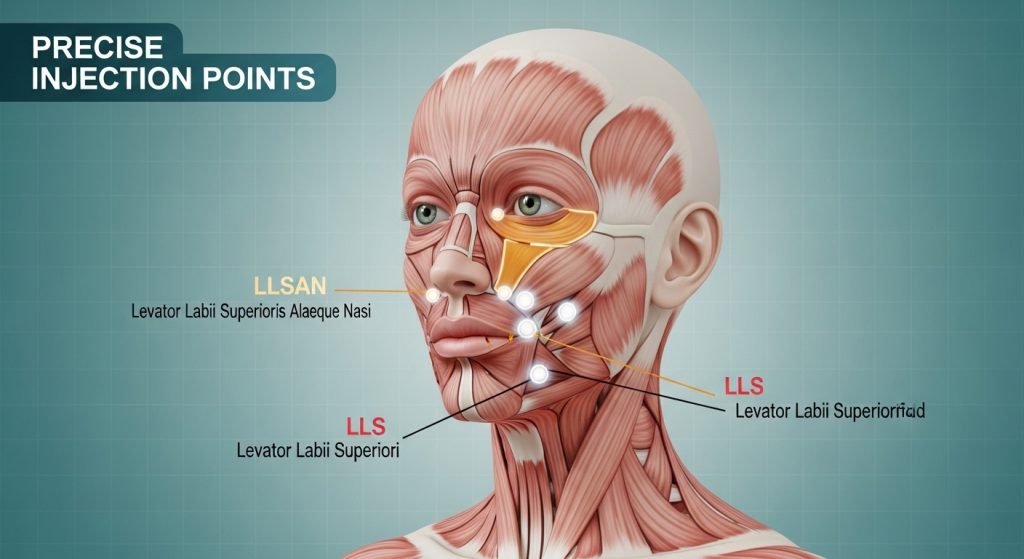
Here lies the brilliance of Botox for a gummy smile. By relaxing the upper lip elevators slightly, Botox helps restore proportional balance without freezing emotion. The change is subtle yet transformative: not a new face, but a truer version of oneself.
Patients often describe this transformation as emotional liberation — the ability to smile without calculation, to speak without hesitation, and to reconnect with their social world. In this sense, Botox for a gummy smile is not merely an aesthetic choice, but an act of self-alignment where medical precision and emotional authenticity intersect.
😊 The Hidden Psychology of Smiling
Smiling is far more than a facial movement — it’s a universal social signal that conveys joy, empathy, and trust. It shapes how others perceive us and how we perceive ourselves. Yet, for many people with a gummy smile, what should be effortless often becomes an act of self-awareness rather than self-expression.
Patients with a gummy smile frequently describe a subtle emotional conflict: they genuinely want to smile, but each time they do, they feel overly exposed. Over time, this self-consciousness leads to behavioral adjustments — such as smiling less in public, laughing softly to avoid attention, or instinctively covering one’s mouth when talking. These micro-behaviors, though small, reveal a profound psychological truth: the fear of being noticed for the wrong reason.
Here, Botox for a gummy smile becomes more than a medical treatment — it becomes an emotional intervention. By relaxing overactive upper lip muscles, Botox for a gummy smile restores balance between teeth, gums, and lips, allowing the person to smile naturally without hesitation. Patients often describe a sense of inner release, saying that after receiving Botox for a gummy smile, they not only look more relaxed but feel more spontaneous, authentic, and genuinely themselves.
In essence, Botox for gummy smile bridges the gap between emotion and expression — transforming the simple act of smiling from a moment of self-consciousness into one of freedom and confidence.
🌍 Cultural Aesthetics of the Smile
Across cultures, beauty standards may differ, but the meaning of a smile remains universal — it connects humans across language barriers. Yet the ideal form of that smile shifts subtly across societies.
In Western cultures, a broad, even-toothed smile represents openness and friendliness. However, excessive gum exposure can be perceived as disproportionate, creating visual tension.
In East Asian cultures, delicacy and balance are central. A soft, closed-lip smile is often associated with grace and composure; thus, excessive gum visibility may contrast with aesthetic ideals of restraint.
In Middle Eastern contexts, where expressiveness and charisma are celebrated, a smile is a sign of warmth and confidence. Still, patients often seek Botox to reduce a gummy smile, ensuring that their expressions reflect vitality rather than nervousness.
The cultural takeaway is clear: there is no single perfect smile. But there is a shared desire — to express joy comfortably, without distraction. Botox enables this by enhancing balance, not erasing individuality.
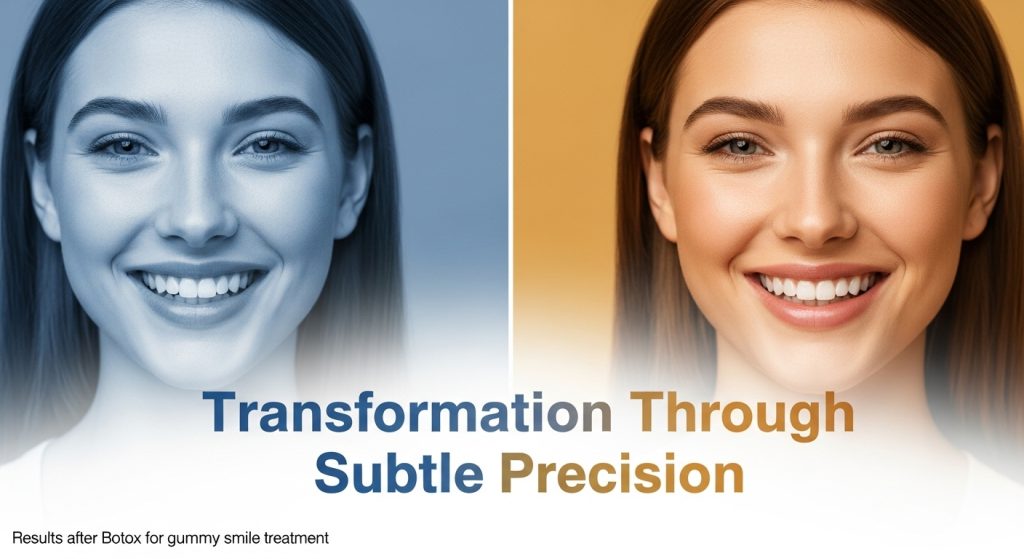
💡 How Botox for Gummy Smile Redefines Self-Perception
Botox for a gummy smile doesn’t change who you are; it changes how freely you can show it.
Psychologically, patients describe a sense of realignment — their inner confidence finally matches their outward expression.
This harmony matters because facial feedback loops are powerful. Studies show that our expressions don’t just reflect mood — they shape it. Smiling confidently sends signals of safety and positivity back to the brain, reducing stress hormones and improving self-image.
Thus, when a gummy smile is softened, the shift isn’t merely aesthetic — it’s neurological. Patients begin to smile more often, which in turn enhances their mood, social engagement, and perceived attractiveness.
💬 The Social Ripple Effect
After receiving Botox for a gummy smile, many patients notice that people respond to them differently, not because others can pinpoint what changed, but because confidence itself conveys a sense of well-being. A balanced, relaxed smile achieved through Botox for a gummy smile invites genuine eye contact, encourages deeper conversations, and radiates warmth that feels both natural and effortless.
A 34-year-old teacher explained:
“After my Botox for a gummy smile, my students told me I seemed happier. The funny thing is — I was happier, just more at ease being myself.”
Similarly, a 40-year-old entrepreneur shared:
“It wasn’t vanity. I just wanted to stop thinking about my smile all the time. After getting Botox for a gummy smile, I can finally focus on what I’m saying instead of how I look.”
These stories demonstrate how Botox for a gummy smile creates a ripple effect that extends far beyond the mirror. When patients feel free to smile without hesitation, their emotional presence expands — they connect more authentically, express more freely, and project a quiet kind of confidence that others instinctively notice.
This is the true essence of aesthetic psychology: subtle physical balance leading to profound emotional transformation.
⚖️ The Role of the Physician as an Artist
Performing Botox for a gummy smile is not a mechanical act — it’s an art guided by empathy. The physician must interpret not only anatomy but also identity.
Each patient’s lip height, gum contour, and emotional expression differ; thus, the goal is not uniformity but harmony.
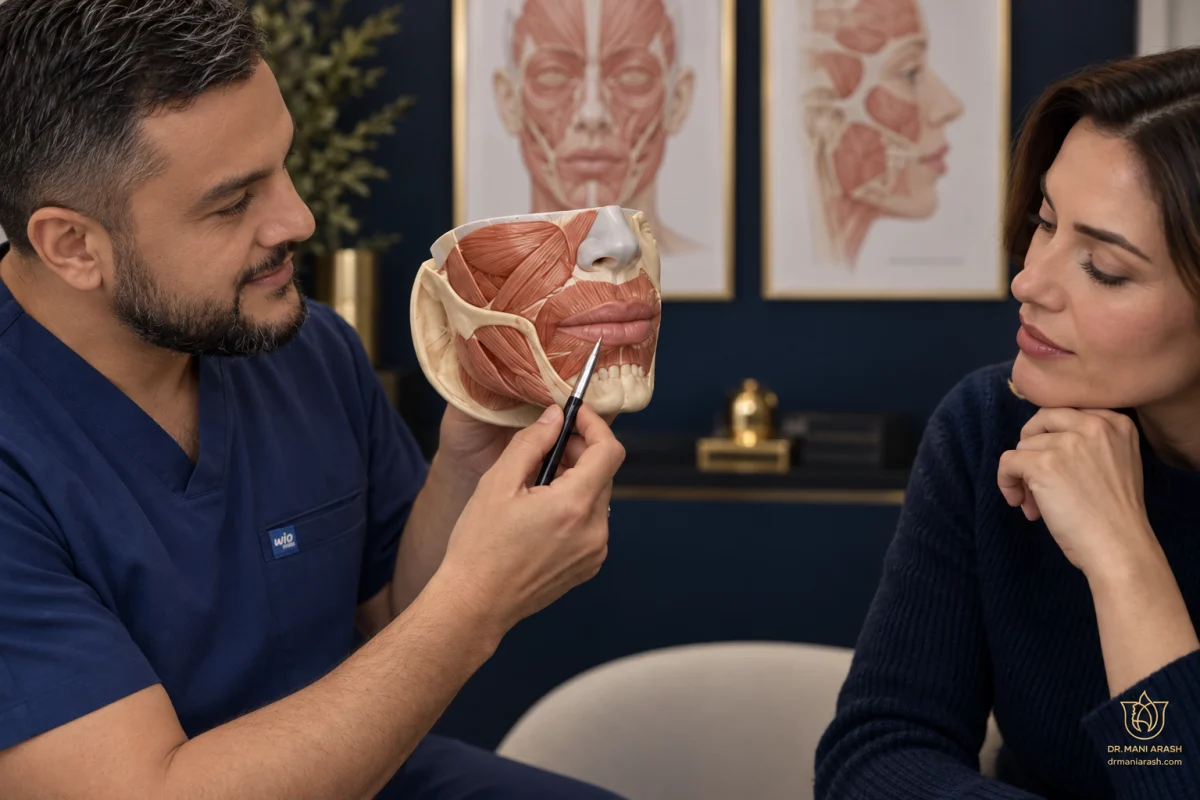
Dr. Mani Arash Rad, known for his personalized approach, treats each face as a unique landscape. His focus is not to erase movement but to restore balance — ensuring the smile remains authentic, expressive, and true to the individual’s personality.
In this sense, aesthetic medicine becomes a collaboration between science and humanity, where precision serves emotion.
🌿 Beyond Beauty: Ethics and Emotional Integrity
The rise of Botox for gummy smiles invites important ethical reflection. Should beauty interventions respond to personal discomfort, or do they risk reinforcing perfectionism?
The answer lies in intention. When a treatment helps individuals express themselves authentically, rather than hiding behind trends, it becomes empowering. The clinician’s ethical responsibility is to discern this difference.
As Dr. Mani Arash Rad often emphasizes, “Botox should enhance life, not define it.”
This patient-centered philosophy ensures that every injection respects both anatomy and emotion — the physical and psychological integrity of the patient.
💫 Real Patients, Real Freedom
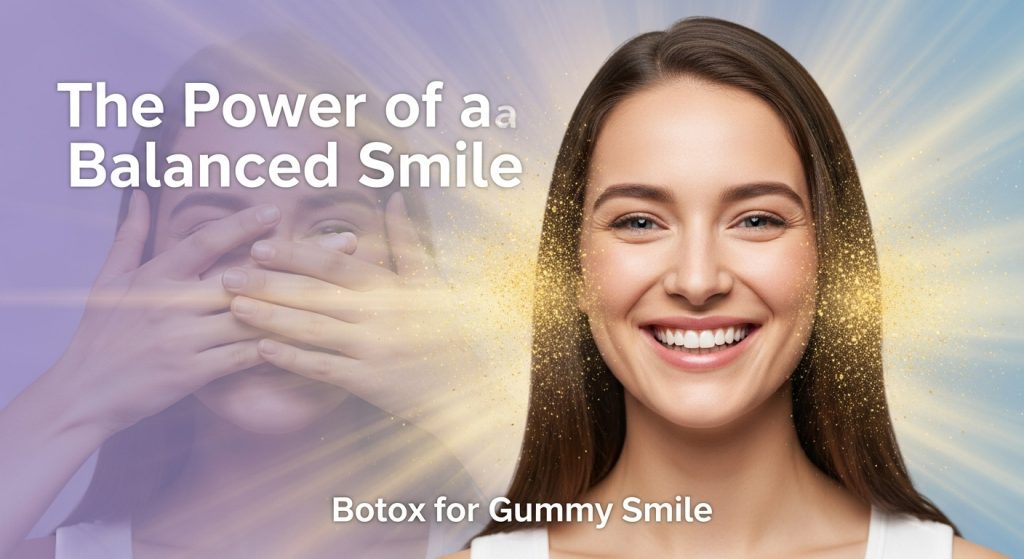
One of the most striking aspects of Botox for a gummy smile is how understated it can be — often invisible to others, yet deeply felt by the patient.
A young bride shared, “It wasn’t about changing my face. It was about allowing myself to smile in photos without second-guessing.”
Another patient, a 29-year-old actor, said, “It’s not dramatic — it’s just me, finally relaxed. My expressions feel honest again.”
These stories illustrate that Botox, when performed thoughtfully, doesn’t create masks. It removes barriers between feeling and expression.
🧠 The Broader Meaning of Smiling
Smiling is a universal act of kindness — one that benefits both others and ourselves. It signals openness, trust, and joy. For some, a gummy smile has long been a quiet source of self-doubt. Botox for a gummy smile gives them permission to reclaim that universal gesture without hesitation.
In this way, medicine transcends aesthetics. It becomes a form of emotional restoration, helping individuals reconnect with their social and psychological well-being through the simple, yet powerful act of smiling freely.
❓ FAQs about Botox for a Gummy Smile
Q: What is Botox for a gummy smile?
It’s a non-surgical injection treatment that relaxes upper lip muscles to reduce gum visibility when smiling.
Q: Can Botox for a gummy smile change how I feel about myself?
Yes. Patients often report greater confidence and ease in social situations.
Q: Does it affect facial expression?
No. When performed by experts, Botox preserves natural expressiveness while improving balance.
Q: How long do results from Botox for a gummy smile last?
Typically, 3–4 months, with repeat sessions helping to maintain consistent results.
Q: Is this treatment safe?
Yes. When administered by professionals like Dr. Mani Arash Rad, it is a safe, precise, and reversible treatment.
🌟 Why Trust Dr. Mani Arash Rad?
Dr. Mani Arash Rad, one of Tehran’s leading experts in aesthetic and therapeutic Botox, is recognized for merging precision with empathy. His approach to Botox for a gummy smile prioritizes natural outcomes and emotional authenticity, ensuring every smile reflects the person behind it.
📍 Address: Tehran, Iran, Saadat Abad, Sarv Gharbi, Bakhshayesh St., Fifteenth Street West, Sinam Medical Building, Third Floor, Unit 11
📞 Contact numbers:
02122364547
02126760580
09197890709
🕒 Working hours: Saturday, Monday, and Wednesday — 3:00 pm to 8:00 pm
💬 WhatsApp: 09197890709
🌐 Website: www.drmaniarash.com
Questions about Smile Freely Again: How Botox Transforms a Gummy Smile?
An examination helps identify what is relevant to your situation. Ask about suitable options, their limitations, recovery and follow-up before deciding.
Contact the clinic →